Excelsior Wood Products Helps Bring the Bellefield Entry Barn to Life in Hyde Park
August 31, 2026
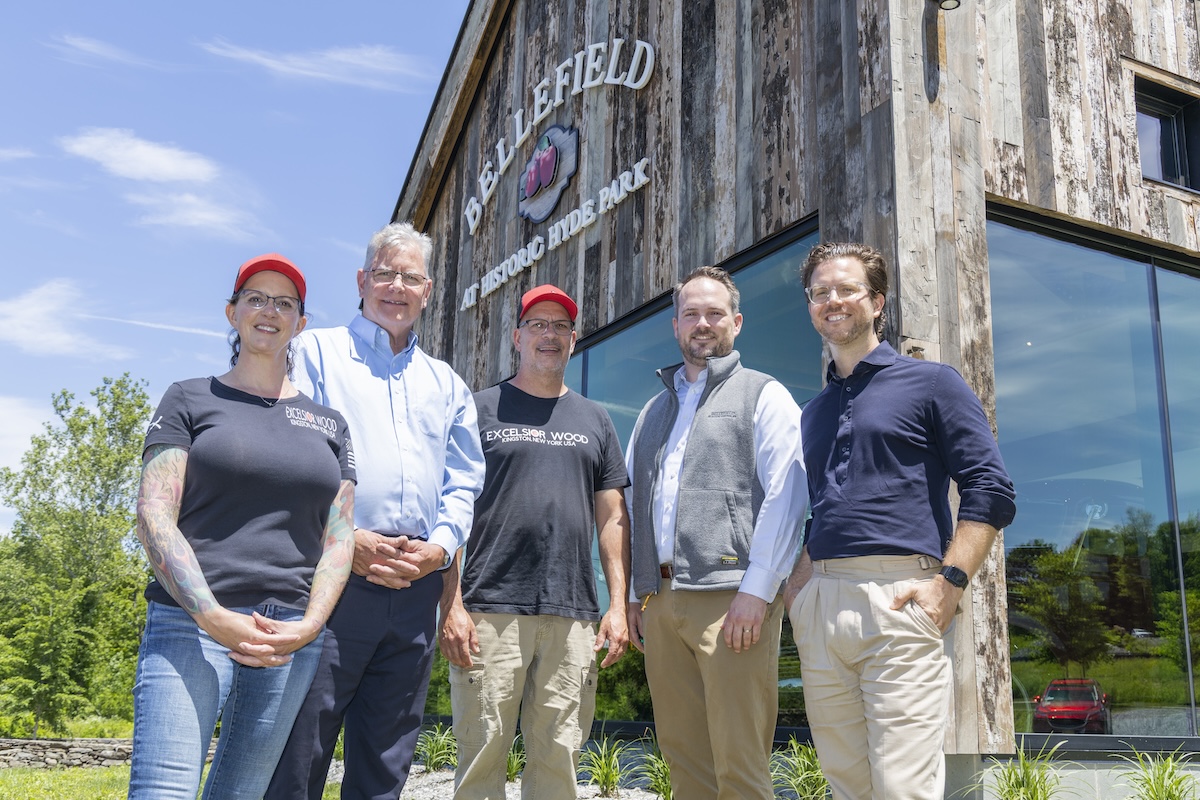
Introducing the first and only building in America featuring reclaimed Angelique wood.
Some buildings are meant to blend in. The entry barn at Bellefield at Historic Hyde Park was never going to be one of them. It's the first structure visitors see when they arrive at a 330-acre community built on the site of a 300-year-old working farm, and it had to do more than mark an entrance. It had to prove, before a single home was sold, that the people building Bellefield understood exactly what kind of land they were standing on.
That's the job Excelsior Wood Products was brought in to help solve, and it's become one of the projects the team is proudest to talk about. Ron Sauer, the owner of Excelsior, walked the Bellefield with Jared, who provided great clarity of the vision. Before any wood was milled, they took the time to understand the agrarian vision behind the project rather than simply fulfilling an order. That kind of listening is what shaped everything that followed: reclaimed Angelique shipped in from Europe for the exterior siding, and sycamore milled directly from trees cleared on the Bellefield property itself for the interior wall and ceiling paneling. Two very different materials, each handled with the same care, and each telling part of the same story.
Ron and the Bellefield team sat down to talk through what this project meant to them, from the vision behind the entry barn to what it felt like to see the finished building for the first time. Watch the video above to hear the story in their own words.
Building on 300 Years of History
The Bellefield property has a documented history that stretches back to the Great Nine Partners Patent of 1697. James Roosevelt, great-grandfather of President Franklin Delano Roosevelt, owned the land in the 1800s, and by 1903 it had become the Saint Andrews-on-the-Hudson Jesuit Novitiate, a working farm with barns, cattle, orchards, and vineyards that operated until 1970. The site sits directly across from the Culinary Institute of America, and the broader town of Hyde Park was seriously considered in the 1940s as a potential home for the United Nations headquarters because of its ties to FDR.
Given that history, Bellefield's developers didn't want their first building to feel like a generic sales office. They wanted an entrance that looked and felt like it belonged on a farm, one that signaled respect for the land before a single home was even built. That's what led to the entry barn, and it's what led the project team to Excelsior.
Giving Overlooked Sycamore a Second Life
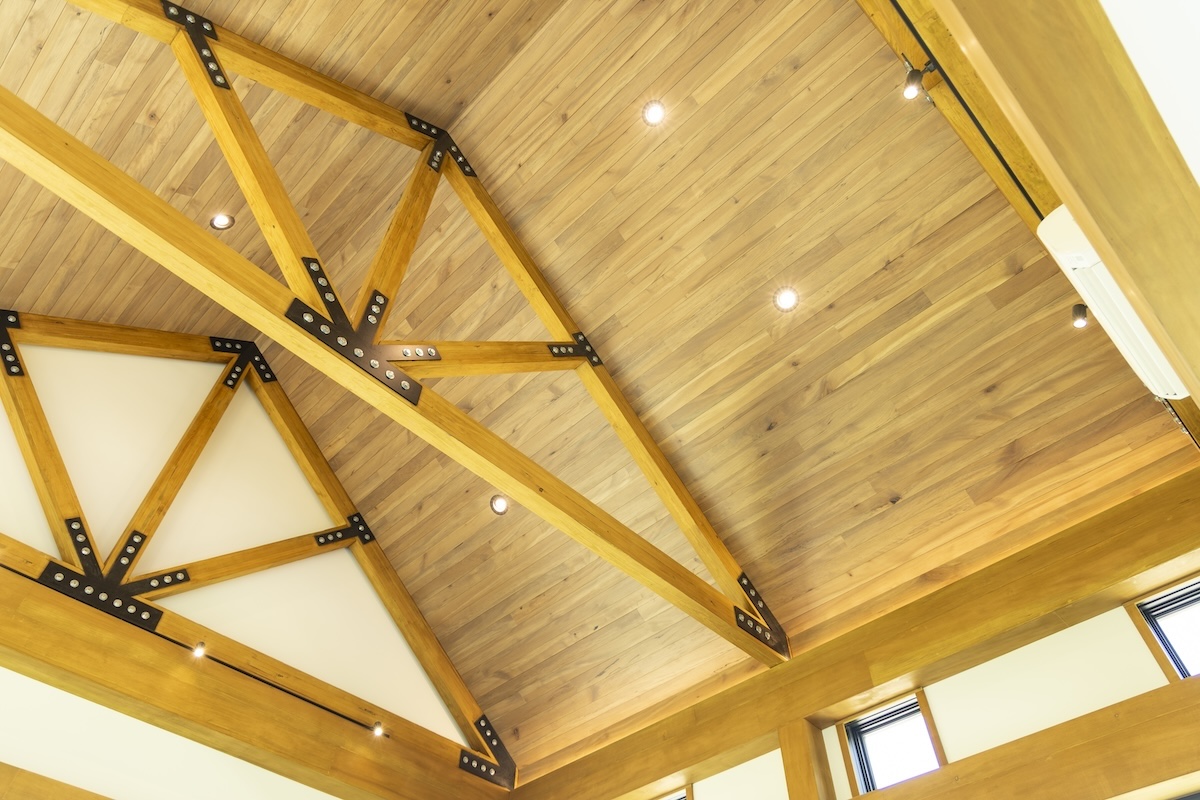
When crews cleared the Bellefield site to make way for construction, they uncovered a large number of mature sycamore trees. Sycamore has a reputation in the lumber industry for being difficult to work with commercially. It tends to warp and twist significantly as it dries, and much of it typically ends up chipped or burned rather than used.
Rather than treating that wood as a loss, the Bellefield team brought Excelsior in early. There's something the Excelsior team finds especially meaningful about this part of the project: the wood in the barn's walls and ceiling grew on the exact ground the building now stands on. From there, the sycamore was custom milled and properly cured, a slow, deliberate process built around controlling how the wood dries so the twisting and warping it's known for never has the chance to set in.
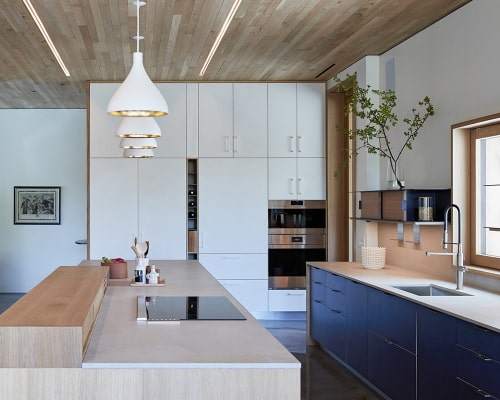
The payoff is visible the moment you step inside. Sycamore has a fine, closely woven grain and a naturally pale, almost silvery tone that can flash into a rippled, figured pattern depending on how it's cut, the kind of texture that's nearly impossible to source at scale unless you have the patience to work with it directly. The result is a bespoke wall and ceiling paneling system that came from the ground the building now stands on, turning wood most developers would chip or burn into one of the barn's defining features.
A First-of-Its-Kind Siding Application
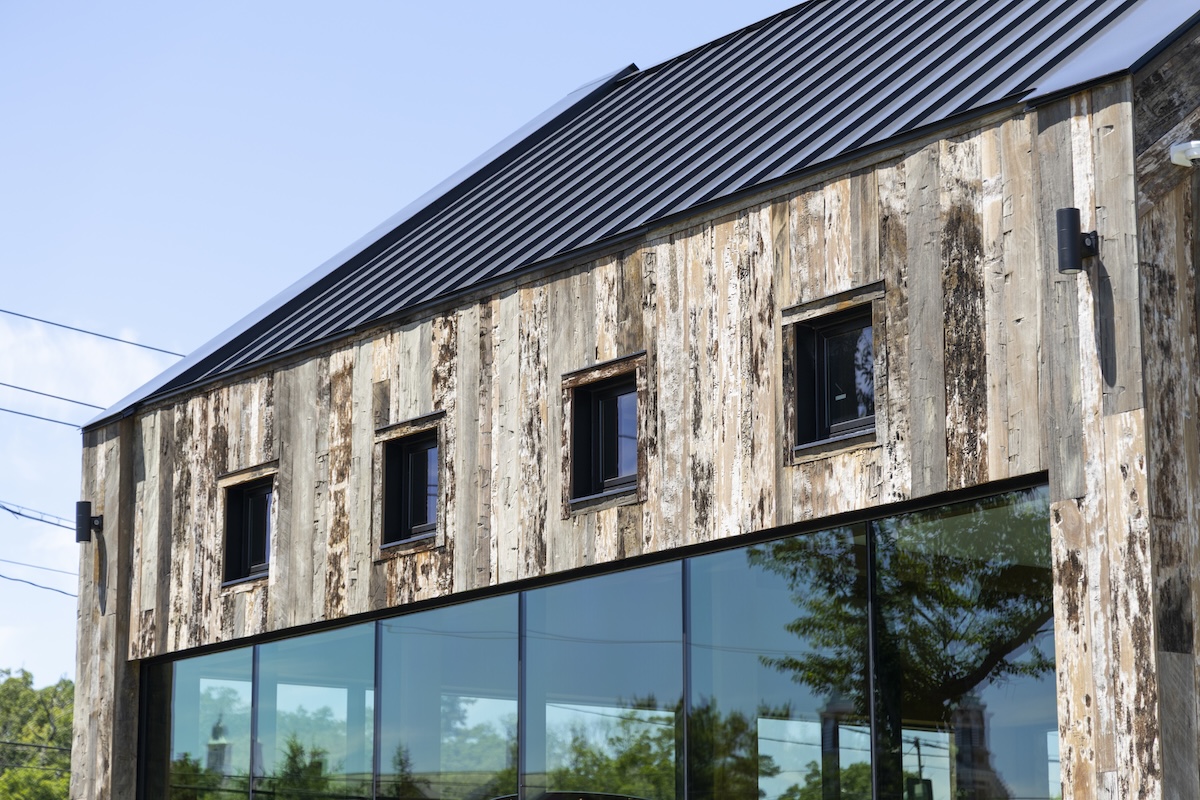
For the barn's exterior, the project called for something durable enough to hold up to the elements for generations while still carrying visual weight and character. The team chose reclaimed Angelique, a dense tropical hardwood long valued in Europe for marine and structural use because of its resistance to rot, decay, and insect damage.
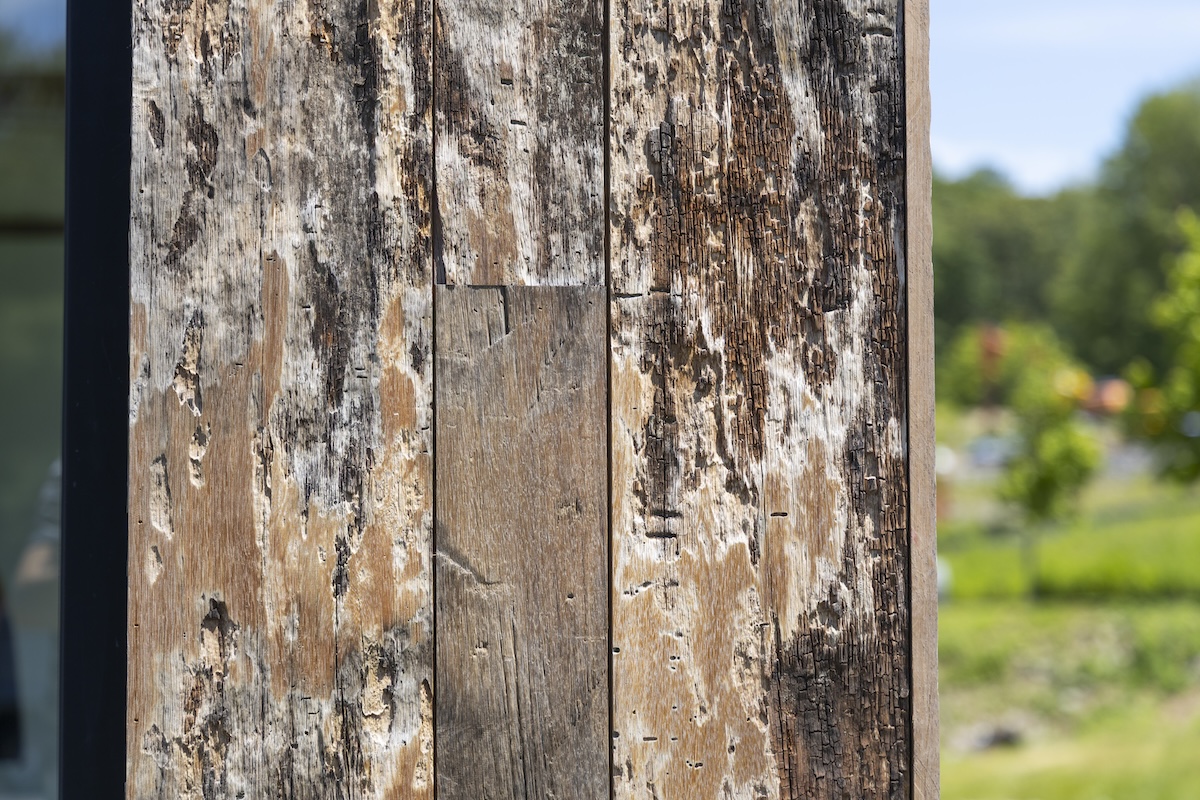
Angelique rewards the right expertise. It's dense enough to dull a chainsaw blade in a few cuts and can weigh thousands of pounds per timber, which is exactly why so few suppliers are equipped to work with it. Milling it into siding takes specialized tooling and a crew that already knows the material's limits. The Angelique used on the Bellefield entry barn was reclaimed from structures in Europe rather than freshly harvested, making it both a sustainable choice and, notably, the first known use of this specific reclaimed material on a building in the United States. Up close, the boards carry a deep, reddish-brown color and a tight, straight grain that only comes from old-growth timber, along with the subtle marks of a former life: nail holes, weathering, small imperfections that give the siding a texture no new-cut board could match.
What the Project Reflects About Excelsior's Approach
The entry barn is a useful example of what Excelsior brings to large-scale projects beyond supplying material. This wasn't a single order fulfilled from stock. It meant coordinating two distinct supply chains at once: importing and processing a rare, reclaimed hardwood from overseas, and milling and curing a batch of unusually large, hard-to-work domestic timber salvaged from the client's own site, then delivering both to spec and on schedule for a commercial build of this visibility. That kind of execution is what separates a wood supplier from a project partner, and it's the same sourcing philosophy behind both materials: finding value in wood other suppliers would pass on, whether that means salvaging reclaimed timber from another continent or reclaiming trees cleared right where the building now stands.
A Growing Agrarian Community
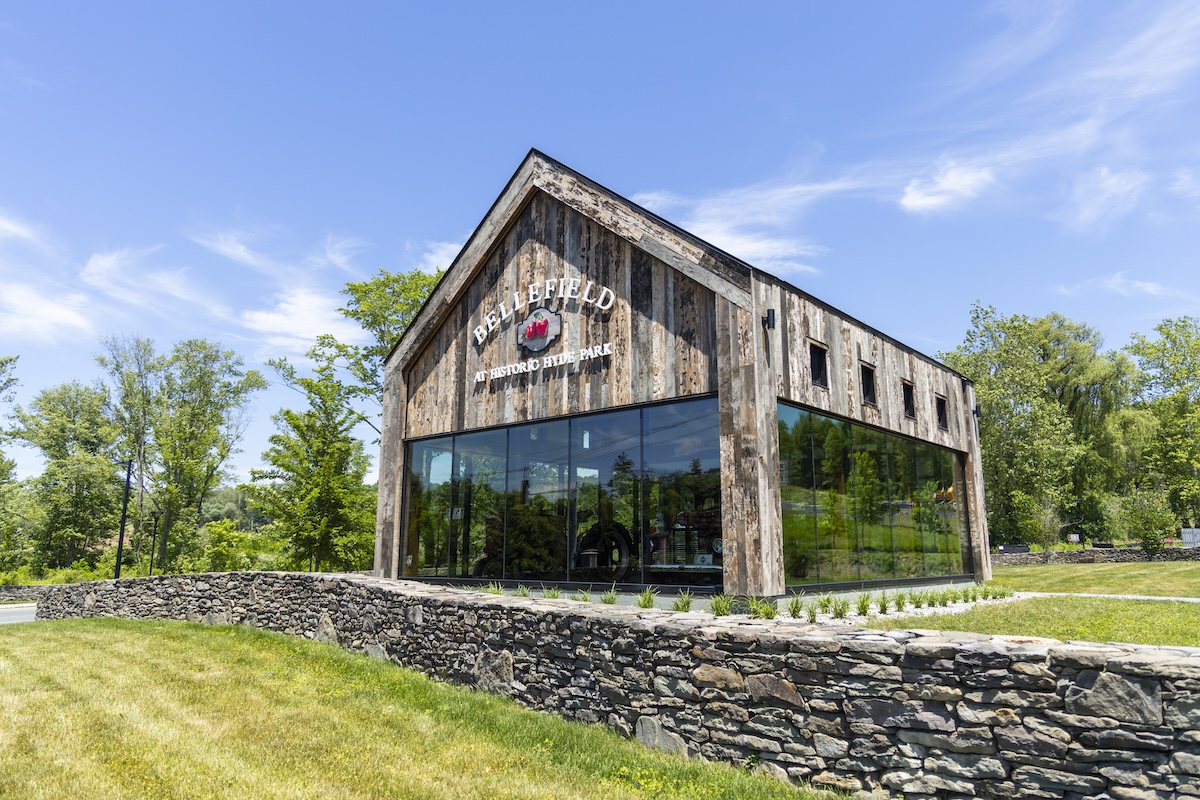
The entry barn is the public introduction to a much larger project. Bellefield is planned across roughly 330 acres and will eventually include more than 800 residences, over 830,000 square feet of commercial space, and two hotels, including the newly opened Inn at Bellefield. Despite that scale, the developers have placed 117.6 acres, close to a third of the property, under permanent conservation easement as protected open space, trails, and working farmland. Residents will have the option to join a Community Supported Agriculture program tied to the property's working farm, with access to a share of the harvest and space for backyard gardens.
The entry barn sets the tone for that balance between growth and stewardship. It's the first thing visitors see, built from wood that came from a European shipyard's past and from trees that once stood on this exact ground, and it was designed to make one thing clear before anyone gets further onto the property: this land's agricultural roots aren't an obstacle to what's being built here. They're the reason for it.
For Ron, that's the part of the project that stands out most. Seeing the finished barn today, what he notices isn't just the craftsmanship in the siding or the paneling. It's that the building manages to hold two timelines at once: the deep history of the land it sits on, and the new community taking shape around it. That balance, more than any single board or beam, is what he's proudest of.